

Monsoon season brings a unique set of challenges for Indian homes – sudden downpours, high humidity, fluctuating light, and dampness that can affect fabrics and finishes over time. Choosing the right roller blinds and window treatments for this season isn’t just about style; it’s about selecting materials and systems that withstand moisture while effectively controlling light and privacy. This guide walks through the best window treatment options for every room during monsoon, and how Dooya’s motorised roller blinds help simplify the season.
Why Monsoon Requires Special Window Treatment Considerations
Monsoon weather can create extra challenges for your window coverings that homeowners often overlook until damage occurs.
Key monsoon-related challenges for window treatments:
● High moisture levels – Can cause fabric curtains to feel damp, develop odours, or encourage mold growth.
● Sudden rain and wind – Rainwater can enter through open or partly open windows and wet your window coverings.
● Reduced, inconsistent daylight – Overcast skies require more flexible light control than peak summer.
● Increased indoor dampness – Affects wooden blinds and certain fabric types more than moisture-resistant materials.
● Frequent adjustment needs – Fast-changing weather often means blinds need repositioning multiple times a day.
How to Choose the Right Roller Blinds Material for Monsoon
Not all roller blind fabrics perform equally well in humid, damp conditions. Choosing the right material significantly reduces maintenance and prolongs the blind’s lifespan.
| Material | Moisture Resistance | Maintenance | Best Rooms for Monsoon |
| PVC/Vinyl-Coated Fabric | Excellent | Wipe clean, minimal upkeep | Kitchen, bathroom, balcony-facing rooms |
| Polyester Blends | Good | Occasional wiping or light cleaning | Living room, bedroom |
| Blackout-Coated Fabric | Good to excellent | Wipe clean, resists moisture absorption | Bedroom, home theatre |
| Natural Cotton/Linen | Poor | Requires regular drying, prone to dampness | Not recommended for high-humidity areas |
| Bamboo/Woven Wood | Poor to moderate | Can warp or discolour with prolonged moisture | Best avoided in monsoon-heavy regions |
Room-by-Room Guide: Best Window Treatments for Monsoon
Living Room
The living room typically sees the most fluctuating light during monsoon, from bright intervals to sudden downpours. Light-filtering roller blinds in polyester or PVC-coated fabric strike a good balance, allowing diffused daylight while resisting moisture from open windows or balcony doors.
Bedroom
Bedrooms benefit from blackout roller blinds that maintain a consistent, restful environment regardless of unpredictable outdoor light. Moisture-resistant blackout fabrics prevent the damp, heavy feeling fabric curtains can develop during extended humid spells.
Kitchen
Kitchens face the highest combined risk of moisture from cooking and monsoon moisture. PVC or vinyl-coated roller blinds are ideal here, as they resist staining, are easy to wipe down, and won’t absorb moisture the way fabric curtains do.
Bathroom
Bathrooms require the most moisture-resistant treatment of any room. Waterproof roller blinds or PVC slat blinds are strongly preferred over fabric curtains, which can develop mold or mildew in consistently moist conditions.
Balcony and Sliding Doors
Areas with direct exposure to wind-driven rain benefit from durable, easy-to-clean roller blinds that can be quickly adjusted. Motorised options are particularly useful here, allowing fast response to sudden weather changes without needing to reach the window physically.
Home Office
Consistent, glare-free lighting matters most in a home office. Light-filtering roller blinds help manage the sharp contrast between overcast skies and brief bursts of strong sunlight common during the monsoon.
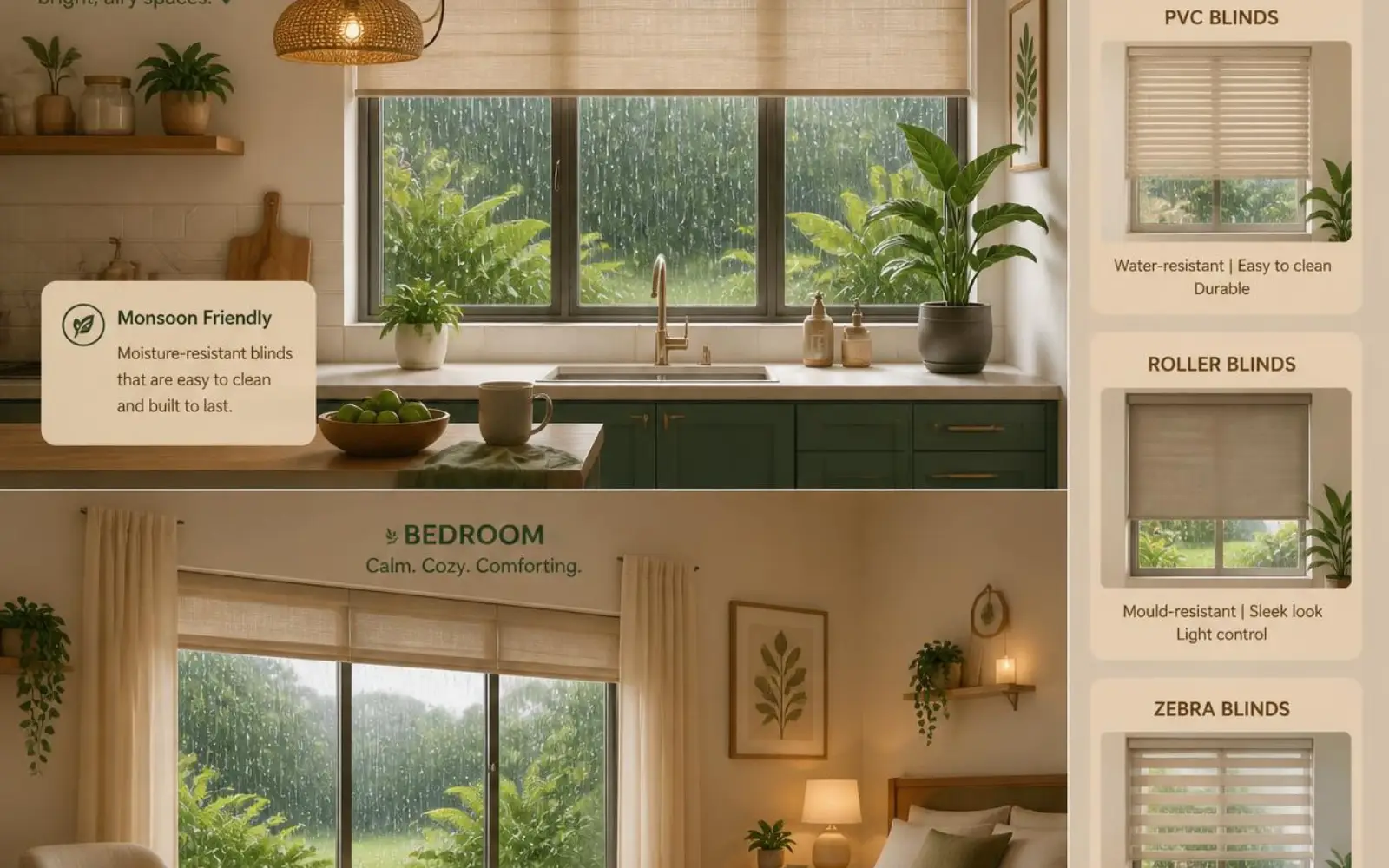
Curtains vs. Roller Blinds During Monsoon
While curtains remain a popular choice for many homes, roller blinds generally offer practical advantages during the monsoon season specifically.
| Factor | Fabric Curtains | Roller Blinds |
| Moisture Absorption | Higher fabric can retain dampness | Lower, especially with PVC/coated fabrics |
| Drying Time | Slower, may develop musty odour | Faster, easy to wipe dry |
| Mold/Mildew Risk | Higher in moisture conditions | Lower with moisture-resistant materials |
| Cleaning | Requires washing or dry cleaning | Simple wipe-down maintenance |
| Light Control | Good, but less precise | Precise and adjustable |
This doesn’t mean curtains should be avoided entirely; many homeowners choose to layer moisture-resistant roller blinds with curtains in living areas for both function and aesthetics, while relying on roller blinds alone in higher-moisture rooms like kitchens and bathrooms.
Why Motorised Roller Blinds Are Especially Useful in Monsoon
Monsoon weather changes quickly, often requiring window coverings to be adjusted multiple times within a single day. Motorised roller blinds address this directly.
Monsoon-specific benefits of motorisation:
● Rapid response to weather changes – Adjust blinds instantly via app or remote as rain or wind picks up.
● No need to approach wet windows – Reduces exposure to rain-splashed glass or sills.
● Scheduled protection – Automate blinds to close during typical peak-rain hours based on local patterns.
● Reduced manual wear – Frequent adjustment via motor reduces strain on chains or cords compared to constant manual use.
● Remote control while away – Adjust blinds from your phone if rain begins unexpectedly while you’re out.
Maintenance Tips for Roller Blinds During Monsoon
● Wipe down regularly – Especially for kitchen and bathroom blinds exposed to higher moisture.
● Check for trapped moisture – Ensure blinds are fully dry before rolling up for storage or extended closure.
● Inspect brackets and mounts – Moisture can occasionally affect metal fittings; check periodically for rust or looseness.
● Avoid prolonged direct water exposure – Even moisture-resistant materials benefit from minimising direct water contact.
● Test motorised components periodically – Ensure motors and sensors are functioning smoothly before peak monsoon months.
Frequently Asked Questions
Q: Are roller blinds better than curtains for moisture climates?
A: Generally, yes, especially PVC or polyester-coated roller blinds, which resist moisture absorption far better than fabric curtains and are easier to clean.
Q: Can motorised roller blinds be damaged by monsoon humidity?
A: Quality motorised systems, including Dooya’s, are engineered to handle typical indoor moisture levels well. It’s still advisable to avoid direct water exposure to the motor housing.
Q: What’s the best roller blind fabric for a monsoon-prone balcony door?
A: PVC or vinyl-coated fabrics are typically the most durable choice for areas with direct wind and rain exposure.
Q: Should I remove curtains completely during monsoon?
A: Not necessarily. Many homeowners layer moisture-resistant roller blinds with curtains, using blinds as the primary functional barrier and curtains for added style and insulation.
Q: Can I automate roller blinds to respond to weather conditions?
A: Some smart systems support scheduling aligned with typical seasonal patterns; fully automated weather-responsive triggers depend on the specific sensors and app features available in your system.
Final Thoughts
Monsoon season puts real demands on window treatments, and choosing the right roller blind material and system for each room can prevent common issues like dampness, mold, and constant manual readjustment. Moisture-resistant fabrics paired with motorised convenience offer one of the most practical solutions for Indian homes facing unpredictable seasonal weather.
Looking to prepare your home for monsoon? Explore Dooya’s motorised roller blinds and experience effortless, moisture-smart window control all season long.