
Choosing motorised roller blinds for your home or office sounds simple, until you realise not every motor suits every window. A motor that works perfectly for a small bedroom window might struggle to operate a large living room blind. And choosing a more powerful motor than you need isn’t always the smartest solution.
So, how do you know which roller blinds motor is right for your window?
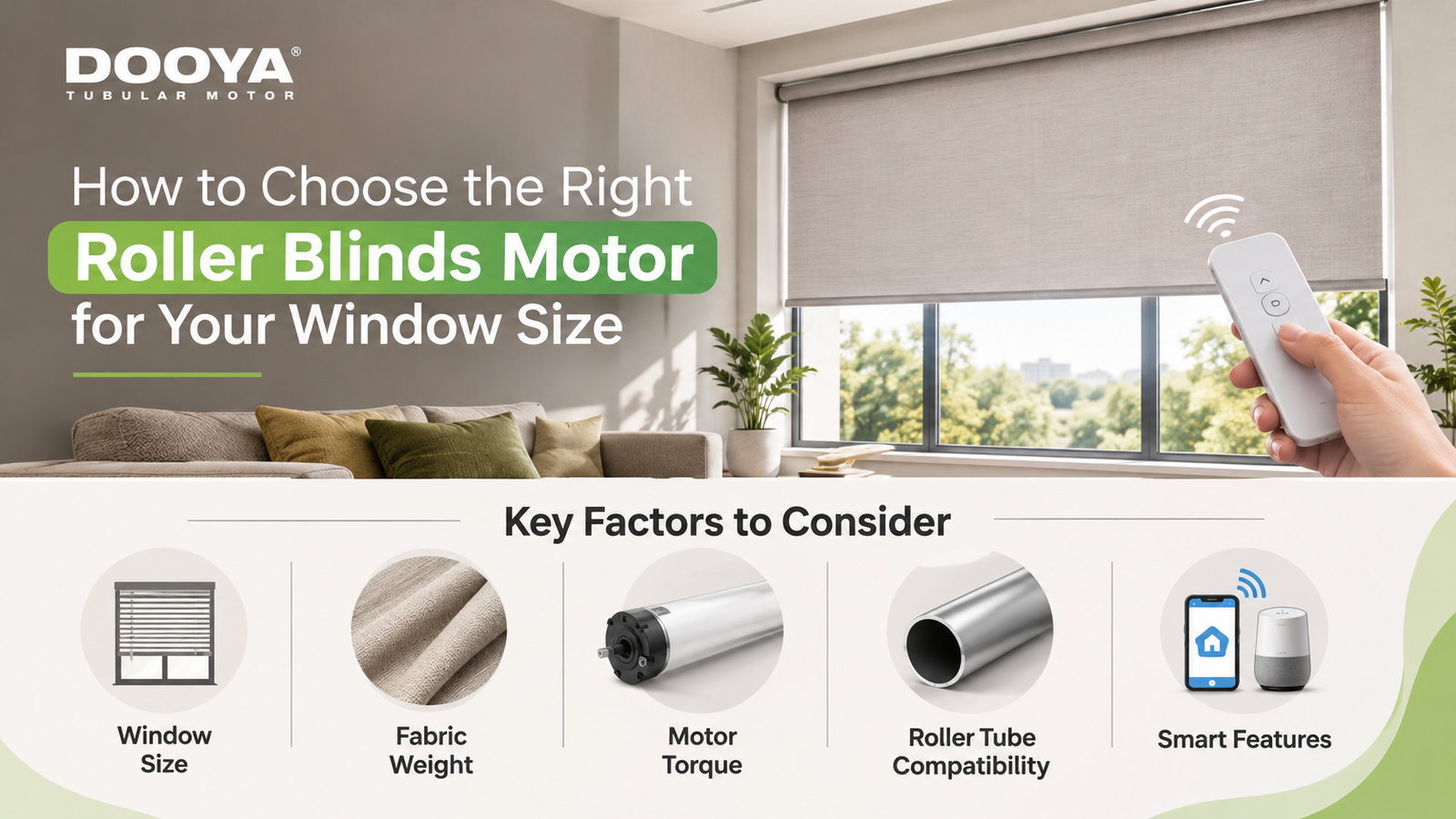
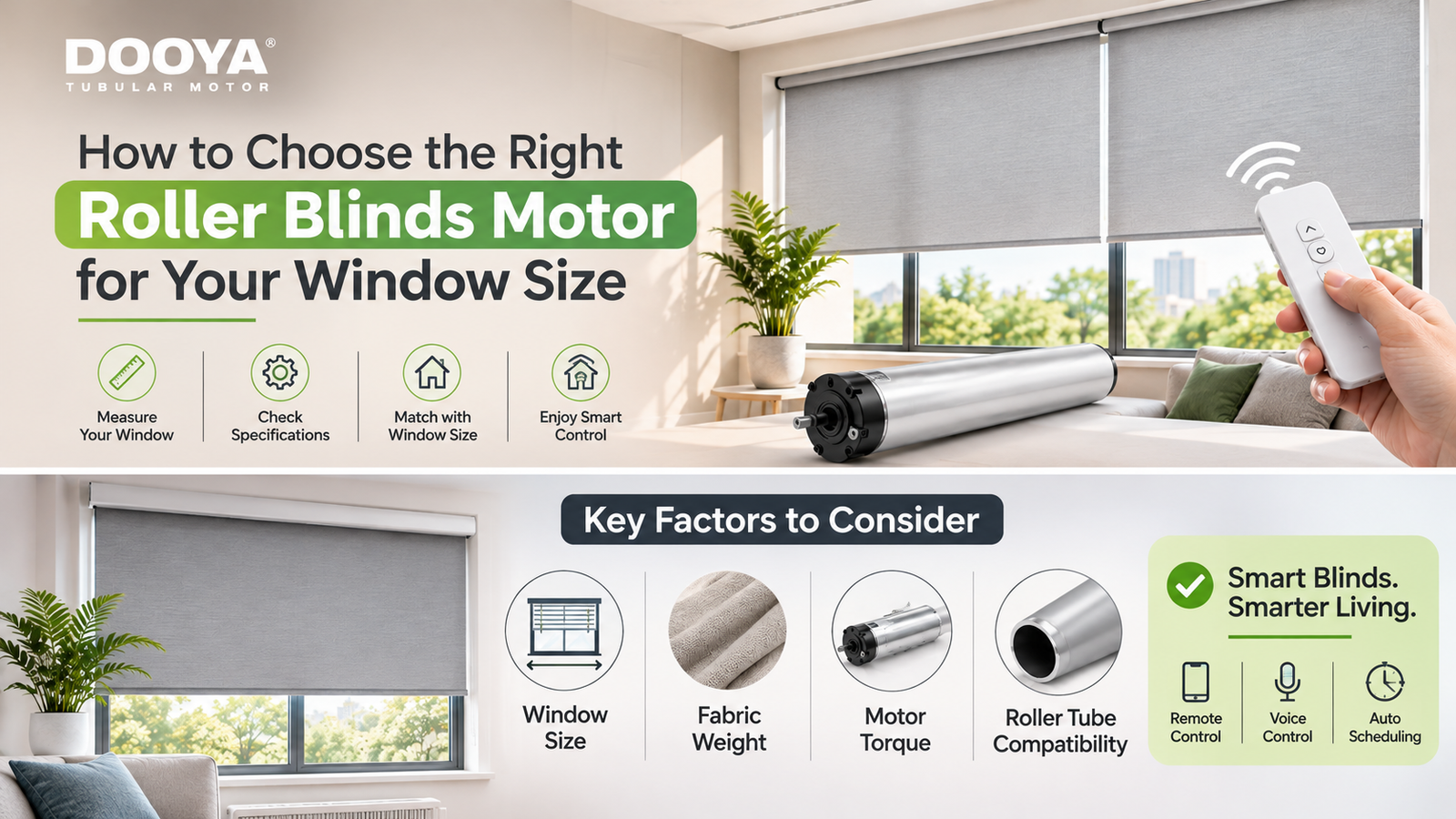
The answer lies in understanding a few important factors, including window size, fabric weight, motor torque, and roller tube compatibility. These details determine how smoothly and reliably your blinds operate over time.
Whether you’re installing new blinds or upgrading your existing ones, this guide will help you understand what to look for, how to calculate your motor requirements, and how to choose a motor that suits your windows.
What Is a Roller Blinds Motor?
A roller blinds motor is a compact device that lets your blinds open and close automatically, without manual chains or cords. Most motorised roller blinds use a tubular motor that fits inside the roller tube. When activated, the motor rotates the tube, allowing the fabric to roll up or down smoothly.
A typical motorised blind system has three main components: a motor that drives movement, a control system that operates the blinds, and a power source that keeps everything running. With their convenience, cordless operation, and smart-home compatibility, motorised roller blinds are becoming a popular choice for modern homes and offices.
Key Motor Specifications You Need to Know
1.Motor Torque (Nm)
Torque determines the motor’s lifting capacity. Common ratings include 1 Nm, 3 Nm, 6 Nm, and 10 Nm. Heavier blinds generally require higher torque.
2.Motor Tube Diameter
The motor must be compatible with your roller tube. Common motor diameters include:
- 25 mm: Small, lightweight blinds
- 35 mm: Medium-sized blinds
45 mm: Large, heavier blinds
3.Power Source
- AC Wired: Suitable for permanent installations.
- DC: Runs on a compatible DC power supply.
- Battery: Convenient for wire-free installations.
- Solar: Supports battery charging through compatible solar panels.
4.Noise Level (dB)
Lower decibel ratings generally mean quieter operation, making low-noise motors ideal for bedrooms and offices.
How to Calculate the Right Motor Size for Your Window
Step 1: Measure Your Window
Measure the width and drop (height) of your roller blind in metres. Multiply them to calculate the total fabric area.
Fabric Area (m²) = Width × Drop
Step 2: Check the Fabric Weight
Different fabrics have different weights. Lightweight, sunscreen, and blackout fabrics may require different motor capacities. Check the fabric weight in grams per square metre (g/m²)
Step 3: Calculate the Total Blind Weight
Multiply the fabric area by its weight per square metre and add the weight of the bottom bar.
Total Weight (kg) = Fabric Area × Fabric Weight (kg/m²) + Bottom Bar Weight
Step 4: Calculate the Required Torque
Use this basic formula to estimate the motor torque:
Torque (Nm) = Total Weight (kg) × 9.81 × Roller Radius (m)
Use the maximum effective roller radius when the fabric is wound up. Allow for mechanical resistance and add a 20–30% safety margin before selecting a motor.
Quick Example
Let’s consider a roller blind with the following measurements:
- Width: 2 m
- Drop: 2.5 m
- Fabric weight: 400 g/m²
- Bottom bar weight: 0.8 kg
- Effective roller radius: 0.025 m
Fabric area: 2 × 2.5 = 5 m²
Total weight: (5 × 0.4) + 0.8 = 2.8 kg
Base torque: 2.8 × 9.81 × 0.025 = 0.69 Nm
Motor Recommendations by Window Size
1.Small Windows (Up to 1.5 m)
Small windows with lightweight blinds generally require less motor power. A 1–3 Nm motor with a compatible 25 mm motor system can be a suitable choice for bedrooms, kitchens, and compact spaces.
2.Medium Windows (1.5–2.5 m)
Medium-sized windows may require additional torque, especially with heavier fabrics. A 3–10 Nm motor with a compatible 35 mm motor system can be considered for living rooms, offices, and similar spaces.
3.Large Windows (Above 2.5 m)
Large windows with wide or heavy blinds may need higher motor capacity. A 10–30 Nm motor with a compatible 45 mm motor system may be suitable for certain large windows and commercial installations.
| Window Width | Indicative Motor Torque | Common Motor Diameter |
| Small (Up to 1.5 m) | 1–3 Nm
| 25 mm |
| Medium (1.5–2.5 m) | 3–10 Nm | 35 mm |
| Large (Above 2.5 m) | 10–30 Nm | 45 mm
|
Smart Features Worth Considering
1.Remote and App Control
Adjust your blinds with a simple button press or smartphone tap, without having to operate them manually.
2.Voice Assistant Compatibility
Control compatible smart roller blind motors using voice commands through Alexa, Google Home, or Apple Home, depending on the system.
3.Timer Scheduling and Automation
Set your blinds to open or close automatically at scheduled times or create personalised scenes that suit your daily routine
4.Obstacle Detection and Quiet Operation
Certain motors can detect resistance and stop movement to help prevent damage, while low-noise technology ensures quieter operation in bedrooms and offices.
Conclusion
Choosing the right roller blinds motor comes down to understanding your window size, fabric weight, motor torque, and installation requirements. With the right combination, you can enjoy smooth, reliable operation and everyday convenience.
Whether you’re upgrading existing blinds or planning a new installation, Dooya offers a range of motorisation solutions designed to suit different window sizes and automation needs. Explore Dooya’s roller blind motors and bring smarter, effortless window control to your space.
FAQs
Q1. What size motor for a standard window?
A 1–3 Nm motor is often sufficient, depending on blind weight and size.
Q2. Can I retrofit a motor to existing blinds?
Yes, if your existing roller tube and fittings are compatible.
Q3. How long do roller blind motors last?
Typically several years, depending on quality, usage, and maintenance.
Q4. Do I need an electrician for installation?
For new mains wiring, yes. Battery-powered motors generally don’t require one.