
Choosing the right roller blinds is about more than selecting a fabric or colour. The way your blinds are installed can significantly affect their appearance, light control, privacy, and overall performance. Two of the most common installation methods are inside-mount and outside-mount roller blinds.
While both options can provide excellent window coverage, they work differently and are suited to different window types and interior requirements. Understanding the difference can help you make a more informed decision before purchasing or installing roller blinds.
In this guide, we explain inside mount vs. outside mount roller blinds, their advantages and disadvantages, measurement requirements, and how to choose the right option for your space.
What Are Roller Blinds?
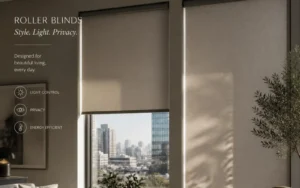
Roller blinds are window coverings made from a continuous piece of fabric or material that rolls around a tube when the blind is opened. They are popular for homes, offices, hotels, and commercial spaces because of their clean appearance, easy operation, and wide range of fabric choices.
Roller blinds can be manually operated or motorised. Motorised roller blinds are particularly useful for large windows, hard-to-reach windows, and smart-home applications.
Depending on the fabric selected, roller blinds can provide:
● Light filtering
● Privacy
● Glare reduction
● Blackout performance
● UV protection
● A clean and contemporary appearance
● Convenient automated operation
However, before selecting the fabric or operating system, it is important to decide how the blind should be mounted.
What Is an Inside Mount for Roller Blinds?
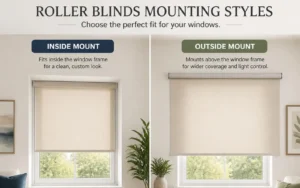
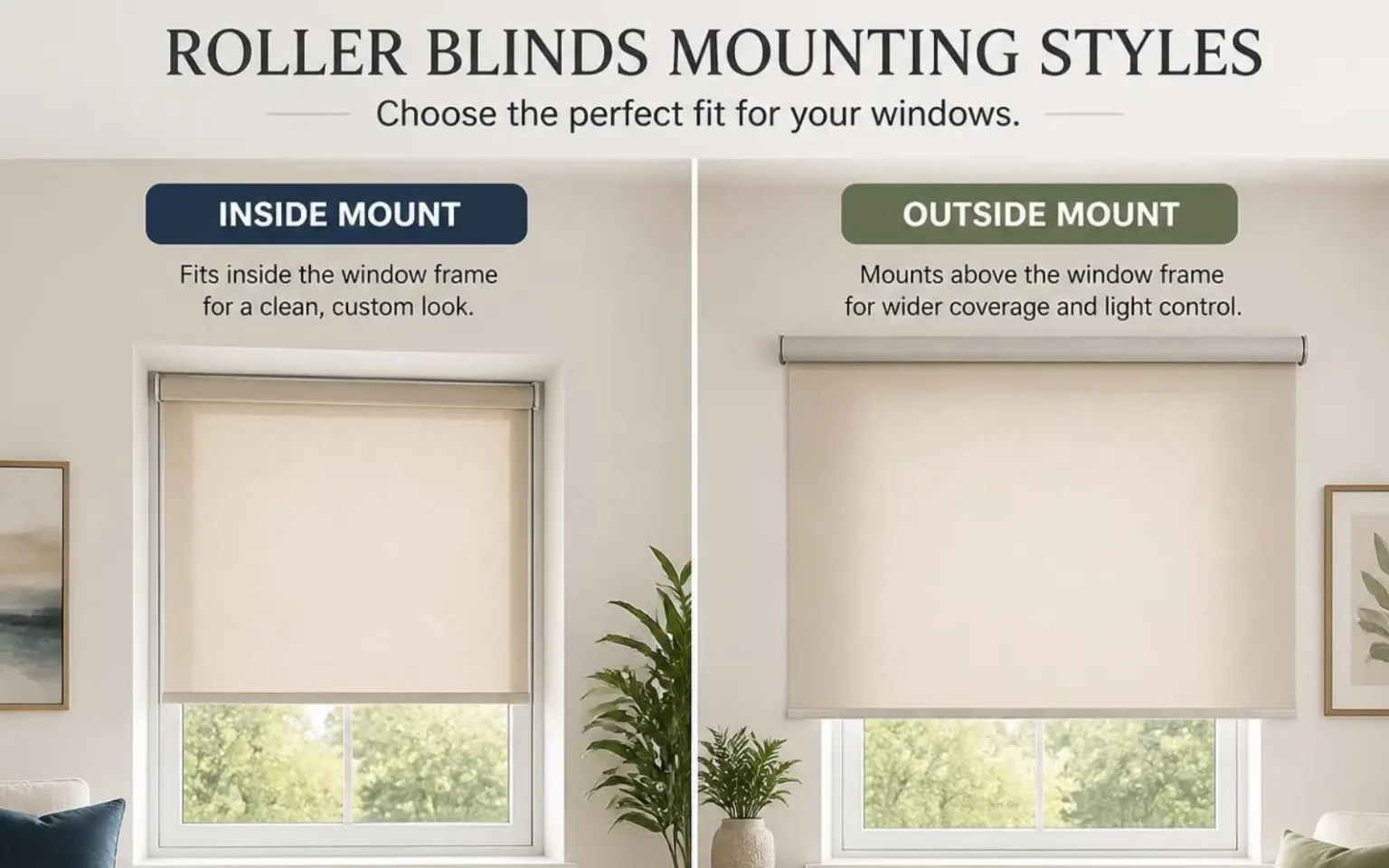
An inside mount installation places the roller blind inside the window recess or frame. The blind sits within the boundaries of the window opening rather than covering the surrounding wall.
This installation creates a neat, built-in appearance and allows the window frame and surrounding wall to remain visible.
Benefits of Inside Mount Roller Blinds
Inside mounting is often preferred when the window recess has sufficient depth, and the homeowner wants a streamlined appearance.
Key benefits include:
● Clean appearance: The blind sits neatly within the window frame.
● Minimal visual impact: More of the window frame remains visible.
● Contemporary look: Creates an integrated appearance.
● Space efficient: The blind does not extend significantly beyond the window opening.
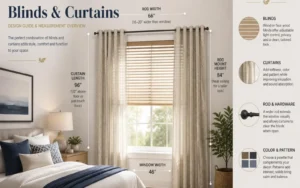
● Suitable for layered treatments: Curtains can sometimes be installed outside the recess while roller blinds sit inside.
Limitations of Inside Mount Roller Blinds
Inside mounting is not ideal for every window.
Potential limitations include:
● Small gaps may allow some light around the edges
● The window recess must have adequate depth
● Handles, locks, or other window hardware can interfere with installation
● Uneven or unusually shaped recesses may make installation more complicated
If maximum room-darkening performance is required, these gaps should be considered carefully.
What Is an Outside Mount for Roller Blinds?
An outside mount installation positions the roller blind outside the window recess. The blind is generally mounted on the wall or window frame above and around the opening.
Instead of fitting inside the recess, the blind extends beyond the window dimensions to provide greater coverage.
Outside mounting is commonly used when the window recess is shallow or when the goal is to minimise light gaps.
Benefits of Outside Mount Roller Blinds
Outside mounting provides several practical advantages:
● Greater window coverage: The blind can extend beyond the window frame.
● Reduced light gaps: Additional coverage around the edges can help limit incoming light.
● Flexible installation: Useful when the recess is too shallow for an inside mount.
● Can make windows appear larger: Mounting the blind above and beyond the window can create the visual impression of a taller or wider window.
● Works with difficult window frames: Useful when handles, locks, or other obstructions prevent an inside installation.
Limitations of Outside Mount Roller Blinds
Outside mounting also has some considerations:
● The blind occupies more wall space
● Mounting hardware may be more visible
● Accurate positioning is important for a balanced appearance
● The surrounding wall must provide enough space for installation
Inside Mount vs. Outside Mount Roller Blinds: Key Differences
The best mounting method depends on your window structure, aesthetic preferences, and functional requirements.
| Feature | Inside Mount | Outside Mount |
| Installation position | Inside window recess | Outside window recess |
| Appearance | Built-in and streamlined | More prominent |
| Light gaps | Usually more around edges | Can reduce edge gaps |
| Recess depth | Requires adequate depth | Less dependent on recess depth |
| Window hardware | May cause interference | Usually easier to accommodate |
| Wall space required | Minimal | More space required |
| Visual effect | Highlights window frame | Can make window appear larger |
| Blackout performance | Good, but edge gaps may remain | Often better edge coverage |
| Best suited for | Deep, suitable recesses | Shallow or obstructed recesses |
How to Choose Between Inside and Outside Mount Roller Blinds
There is no universal answer. The correct choice depends on the characteristics of your windows and the results you want to achieve.
Choose Inside Mount When:
Inside mounting may be the better option if:
● Your window recess is sufficiently deep
● You prefer a clean, integrated appearance
● The window frame is attractive, and you want to keep it visible
● There are no major obstructions inside the recess
● You are comfortable with small amounts of light potentially entering around the edges
Choose Outside Mount When:
Outside mounting may be preferable if:
● Your window recess is too shallow
● Window handles or locks interfere with an inside installation
● You want greater coverage around the window
● Reducing light gaps is a priority
● You want to create the appearance of a larger window
● You need greater flexibility in positioning the blind
How to Measure for Inside Mount Roller Blinds
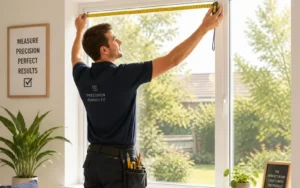
Accurate measurement is essential for a successful installation.
For an inside mount, measurements generally need to account for:
- Width: Measure the inside width of the window recess at multiple points.
- Height: Measure the inside height of the recess.
- Depth: Check whether the recess has sufficient depth for the chosen roller blinds and their hardware.
- Obstructions: Check for handles, locks, window-opening mechanisms, and other objects.
Because windows are not always perfectly square, measuring several points can help identify variations.
How to Measure for Outside Mount Roller Blinds
Outside mount measurements focus on the total area that the blind needs to cover.
Consider:
- The width of the window opening
- Additional width required on both sides
- The height of the window
- Additional coverage above and below the window
- The available wall space for brackets and the blind tube
The exact overlap required depends on the blind system, fabric, window design, and desired level of light control. For motorised roller blinds, the measurement should also account for the motor, brackets, control system, and available installation space.
Which Mount Is Better for Blackout Roller Blinds?
If your priority is creating a darker room, outside mounting can offer an advantage because the blind can extend beyond the window opening and reduce the amount of light entering around the edges. However, the mounting method is only one factor.
For improved blackout performance, also consider:
● Blackout fabric
● Blind width and height
● Side gaps
● Installation position
● Window frame design
● Light leakage around the roller mechanism
For rooms such as bedrooms, nurseries, home theatres, and media rooms, a properly planned blackout solution can provide better results than simply choosing a darker-coloured fabric.
Can Roller Blinds Be Motorised?
Yes, motorised roller blinds are an increasingly popular option for modern residential and commercial interiors.
Instead of manually pulling a chain or adjusting the blind, users can operate the blinds through compatible controls. Depending on the system, control options may include remote controls, wall switches, smartphone applications, and smart-home integration.
Motorisation is particularly useful for:
● Large windows
● Floor-to-ceiling windows
● Multiple windows
● High windows
● Hard-to-reach windows
● Offices and commercial spaces
● Smart homes
A motorised system can also allow multiple roller blinds to operate together, making it easier to manage daylight and privacy throughout a room.
Why Choose Dooya Motorised Roller Blinds?
Dooya provides motorised window-covering solutions designed to combine convenience, smooth operation, and modern automation. For Roller Blinds, a suitable motorised system can help eliminate repetitive manual operation while providing greater control over the window environment.
Depending on the selected system, features may include:
● Smooth and quiet operation
● Remote control
● Smart control options
● Wall-switch operation
● Scheduling capabilities
● Integration with compatible smart-home systems
● Solutions for different blind sizes and applications
When selecting a motor, it is important to consider the blind dimensions, fabric weight, tube specifications, power requirements, and installation conditions rather than choosing a motor based on appearance alone.
Common Mistakes to Avoid When Mounting Roller Blinds
Avoiding installation mistakes can improve both the appearance and performance of your roller blinds.
1. Measuring Only Once
Windows can vary slightly from top to bottom or side to side. Multiple measurements help identify these differences.
2. Ignoring Window Hardware
Handles, locks, hinges, and opening mechanisms can affect whether an inside mount is practical.
3. Choosing Mount Type Based Only on Appearance
A mounting method should work with the physical structure of the window, not just the desired look.
4. Forgetting Light Gaps
If blackout performance is important, consider how the mounting position affects gaps around the blind.
5. Not Planning for Motorisation
If you may want automated roller blinds, consider the motor, power supply, brackets, and control system before installation.
Final Verdict: Inside or Outside Mount Roller Blinds?
Both mounting methods have clear advantages. Inside mount roller blinds are ideal when you want a neat, integrated appearance and have a suitable window recess. Outside mount roller blinds are often better when the recess is shallow, window hardware creates obstructions, or greater window coverage and reduced light gaps are important.
For the best result, consider the window structure, desired light control, privacy requirements, interior style, and whether you want manual or motorised operation. With the right measurements and mounting method, roller blinds can provide an attractive, practical, and modern window-covering solution for homes and commercial spaces.
Frequently Asked Questions About Roller Blinds
Are inside or outside mount roller blinds better?
Neither is universally better. Inside mounts provide a clean built-in appearance, while outside mounts offer greater coverage and installation flexibility.
Do outside mount roller blinds block more light?
They can reduce light entering around the edges because the blind can extend beyond the window opening, although the final performance also depends on the fabric and installation.
Can I install roller blinds inside a shallow window recess?
An outside mount may be more suitable when there is insufficient recess depth for the required brackets and blind mechanism.
Are outside mount roller blinds suitable for bedrooms?
Yes. They can be particularly useful in bedrooms when combined with blackout fabric to minimise light entering around the window.
Can both inside and outside mount roller blinds be motorised?
Yes, motorised systems can be designed for different roller blind installation configurations, subject to the blind dimensions, hardware, and motor requirements.
How do I know which roller blinds are right for my windows?
Evaluate your window depth, dimensions, hardware, desired privacy and light control, interior design, and preferred operating method. Professional measurement and installation can help ensure the correct fit.