
Home design is undergoing one of its biggest shifts in decades. Artificial Intelligence, once limited to smartphones and voice assistants, has moved into the physical fabric of our homes – controlling light, temperature, security, and even the fabric on our windows. Today’s homes are increasingly built around automation products that sense, learn, and respond, rather than waiting for a manual switch to be flipped.
This guide takes a broad look at how AI is reshaping modern home design across multiple categories of smart products, and where motorised window coverings – an area Dooya specialises in – fit into that larger picture.
What Does “AI in Home Design” Actually Mean?
AI in home design refers to systems that use sensors, connectivity, and often machine learning to make a home’s fixtures behave intelligently, adjusting automatically to real-world conditions instead of requiring constant manual input.
Core Characteristics of AI-driven Homes:
- Adaptive behaviour – Devices respond to real-time data like light, temperature, or occupancy
- Learning capability – Systems recognise routines and anticipate needs over time
- Interconnectivity – Lighting, climate, security, and window coverings can act together
- Remote accessibility – Homeowners can monitor and control devices from anywhere
- Reduced manual effort – Repetitive daily tasks are automated
The Major Categories of Home Automation Products
AI-driven home design isn’t a single product; it’s an ecosystem. Below is an overview of the main categories shaping modern smart homes today.
| Category | What It Does | Example Products |
| Smart Lighting | Adjusts brightness and colour based on time, occupancy, or mood | App-controlled bulbs, motion-sensor switches, tunable white lighting |
| Smart Thermostats | Learns household patterns to optimise heating/cooling | Learning thermostats, zone-based climate controllers |
| Smart Security | Monitors and alerts using AI-based detection | Video doorbells, motion-sensing cameras, smart locks |
| Smart Plugs & Switches | Adds automation to existing appliances | App-controlled outlets, energy-monitoring switches |
| Voice Assistants & Hubs | Centralises control and enables voice commands | Smart speakers, home automation hubs |
| Robotic Cleaning | Automates routine cleaning tasks | Robot vacuums and mops with mapping sensors |
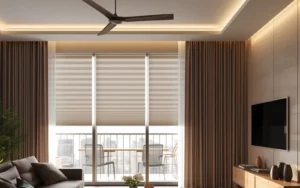
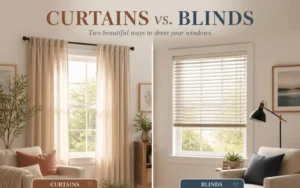
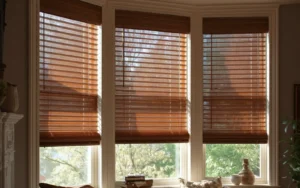
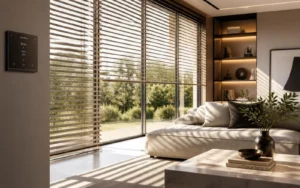
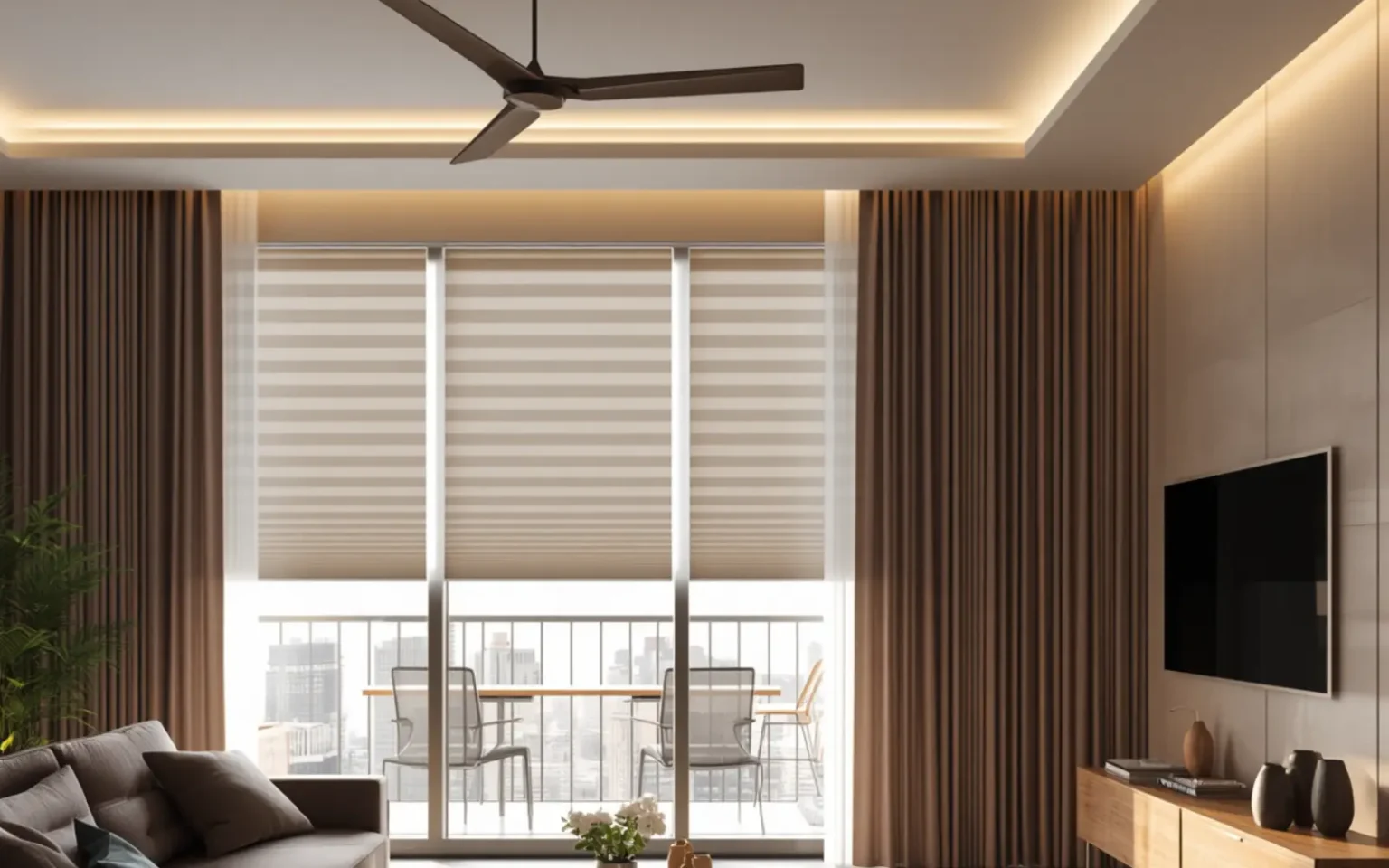
| Motorised Window Coverings | Automates light and privacy control | Motorised roller blinds, curtains, and Venetian blinds |
Each category solves a different everyday problem, but they share a common thread: replacing manual, repetitive actions with intelligent, automatic responses.
Why These Categories Work Better Together
While each automation product delivers value on its own, the real potential of AI in home design comes from integration. A well-connected home doesn’t just automate individual tasks; it coordinates them.
Examples of Integrated Automation:
- A motion sensor triggers smart lighting and unlocks the smart lock automatically when you arrive home
- A thermostat lowers the temperature while motorised blinds close to block afternoon heat
- A security camera detects unusual motion and triggers lighting to switch on automatically
- A “Good Morning” voice command opens curtains, raises blinds, and adjusts lighting together
This kind of coordinated response is often referred to as a “scene”, a single trigger that activates multiple automated systems at once.
A Closer Look: Automating Light and Privacy
Among all the categories above, window coverings play a uniquely large role in a home’s comfort and energy performance. Natural light and heat gain directly affect indoor temperature, glare, and even sleep quality, yet window coverings are often the last thing homeowners think to automate.
How AI-driven Window Automation Typically Works:
- Sensing – Light and temperature sensors monitor real-time room conditions.
- Processing – An algorithm or schedule determines the optimal position for blinds or curtains.
- Action – A motor adjusts the window covering automatically, with no manual input required.
- Refinement – Over time, manual overrides help fine-tune future automated behaviour.
Common Types of Motorised Window Coverings:
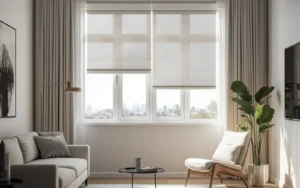
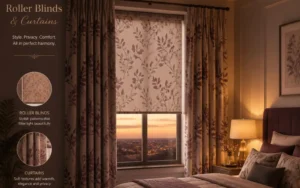
- Motorised Roller Blinds – Compact, minimalist, well-suited to frequent automated movement
- Motorised Curtains – Add insulation and softness alongside automation
- Motorised Venetian and Vertical Blinds – Offer precise, tiltable light control
- Motorised Cellular/Honeycomb Blinds – Combine automation with enhanced thermal insulation
Choosing the Right Automation Products for Your Home
Not every home needs every category of automation at once. A practical approach usually works best:
- Identify daily pain points – Which manual tasks do you repeat most often?
- Prioritise high-impact areas – Lighting and window coverings typically offer the most noticeable everyday improvement.
- Choose interoperable products – Favour systems that integrate with your existing voice assistant or smart hub, even across different brands.
- Scale gradually – Add rooms or categories over time rather than automating everything at once.
- Consider long-term support – Reliable after-sales service matters more than flashy features for daily-use products.
Where Dooya Fits into the Bigger Picture
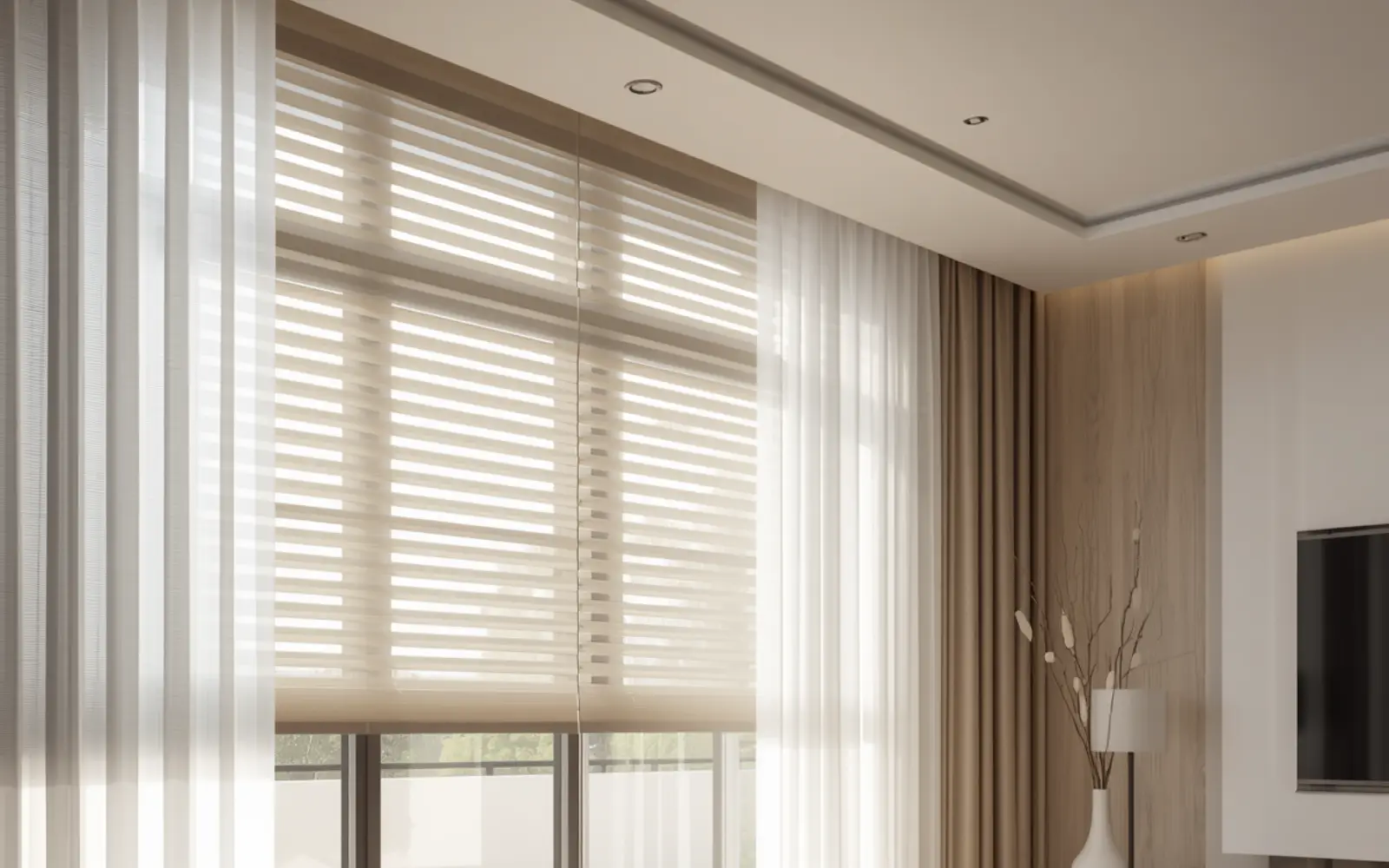
While AI-driven home design spans many product categories, Dooya’s focus is specifically on motorisation technology for window coverings, one of the most impactful yet often overlooked areas of home automation.
What Dooya brings to a broader smart home setup:
- Reliable motors – Engineered for quiet, precise, and frequent daily automation
- Compatibility across window covering types – Roller blinds, curtains, Venetian, and Vertical blinds
- App-based scheduling and scene creation – Coordinates with other smart devices for combined automation
- Voice assistant integration – Works alongside existing smart home ecosystems rather than requiring a separate system
- Flexible power options – Wired, battery, and solar-powered motors to suit different installations
- Local support in India – Installation and service backed by Dooya’s official network
Rather than replacing your existing smart home setup, Dooya’s systems are designed to plug into it, filling a gap that many home automation ecosystems overlook.
Frequently Asked Questions
Q: Do I need one brand to control my whole smart home?
Not necessarily. Many automation products, including Dooya’s motorised window coverings, are designed to integrate with popular third-party voice assistants and smart home hubs, allowing different brands to work together.
Q: Which automation category offers the best return on investment?
It depends on the household, but lighting and window coverings are often cited as high-impact starting points due to their frequent daily use and effect on energy consumption.
Q: Is home automation only useful for large or new homes?
No. Many products, including motorised roller blinds and smart plugs, are retrofit-friendly and can be added to existing homes and apartments without major renovation.
Q: How do smart homes actually save energy?
By automating lighting, climate, and window coverings based on real-time conditions, smart homes reduce unnecessary energy use; for example, blinds closing during peak heat to reduce air conditioning load.
Q: Can motorised window coverings work without a full smart home system?
Yes. Systems like Dooya’s can operate independently via remote or app control, and can be integrated into a broader smart home setup later if desired.
Final Thoughts
AI in modern home design is no longer confined to a single device or gadget; it’s an ecosystem of lighting, climate, security, and window automation working together to make homes more comfortable, efficient, and responsive. Motorised window coverings are a particularly practical entry point into this ecosystem, and Dooya’s motorisation technology offers a reliable way to bring that intelligence to your windows, whether as a standalone upgrade or part of a larger connected home.
Curious where to start? Explore Dooya‘s motorised window covering solutions and see how they fit into your broader smart home plans.